

Background
Immersive memory walks are increasingly used as a non-invasive method of engaging with difficult heritage sites, especially where material traces are absent, contested, or ethically sensitive. They shift the focus from permanent physical interventions to embodied, temporal, and sensory experiences, allowing participants to encounter memory through movement, perception, and dialogue.
The integration of soundscape practices including recorded narratives, ambient compositions, and guided listening extends this method by activating auditory perception as a key interpretative layer. This is particularly relevant in urban environments where historical traces have been erased or overwritten.
Case Study 13: “In This Place”, Kraków (Poland)
Highlights
- Use of sound as a primary medium of memory activation
- Creating a mobile, ephemeral “acoustic memorial”
- Engaging participants in individual, embodied reflection within public space
Description
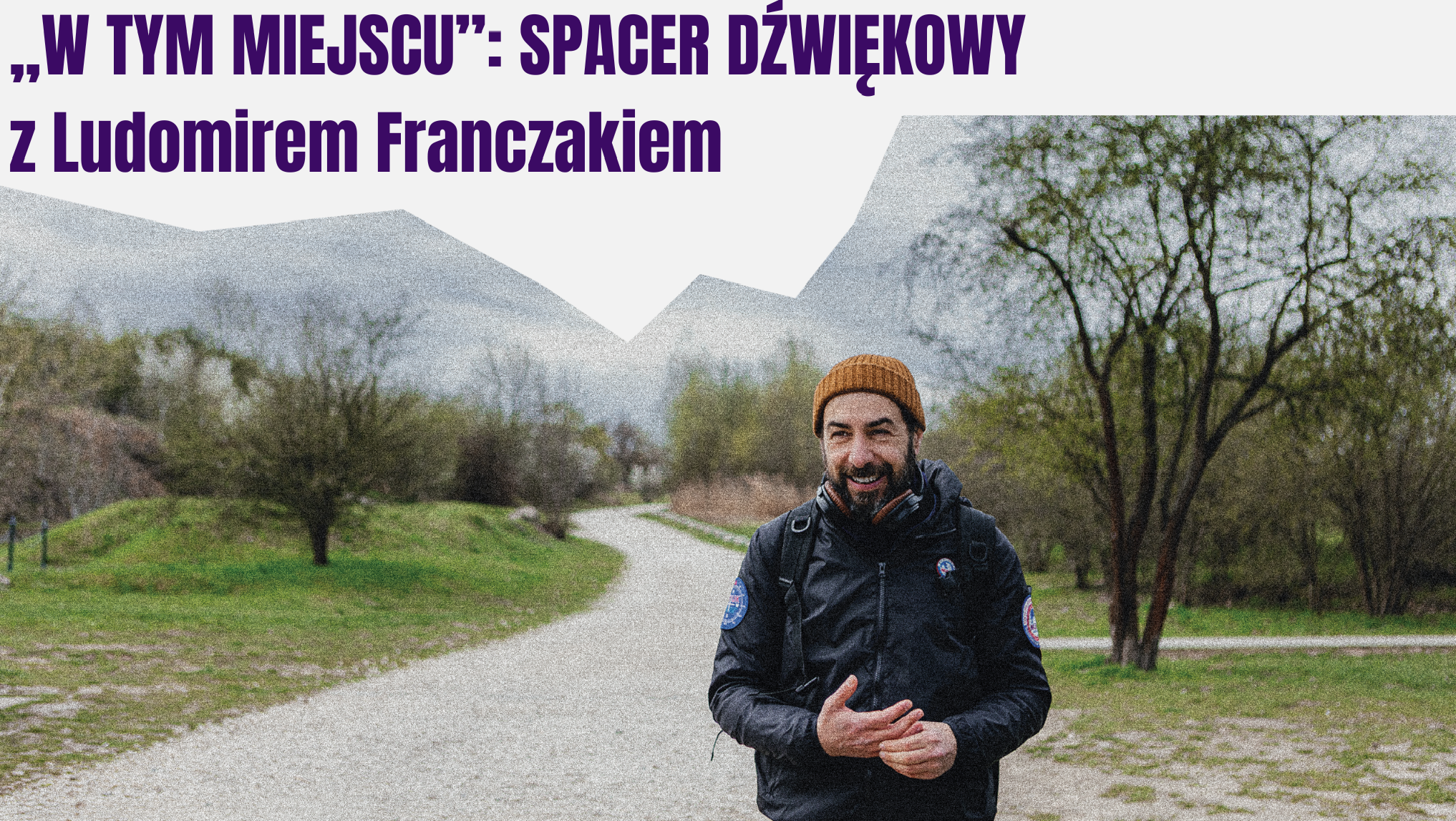
The walk “In This Place” („W tym miejscu”) by Marcin Dymiter and Ludomir Franczak, presented within FestivALT, is a performative, sound-based memory walk guiding participants through urban spaces marked by the absence of Jewish heritage.
Rather than offering a traditional guided tour, the project constructs a fragmented, multi-layered experience. Participants navigate the city while engaging with audio materials—such as recorded voices, narrative fragments, or sound compositions—which recontextualize the surrounding environment.
The soundscape functions as a non-visible layer of interpretation, evoking histories that are no longer materially present. It allows participants to experience overlapping temporalities and confront the dissonance between past and present urban landscapes.
Challenges
- HOW to represent absence without reconstructing or simplifying history?
- HOW to balance artistic interpretation with historical sensitivity?
- HOW to engage participants without imposing a fixed narrative?
Solutions
- Using sound to evoke rather than reconstruct lost histories
- Designing an open-ended narrative structure based on fragments and reflection
- Allowing participants to individually negotiate meaning through movement and listening
Case Study 14: Memory Walks at Gwarna Street, Wrocław (Poland)
Highlights
- Combining historical knowledge, ethics, and spatial experience
- Engaging diverse participants (students, residents, experts)
- Using walks as a tool for community dialogue and awareness-building
Description
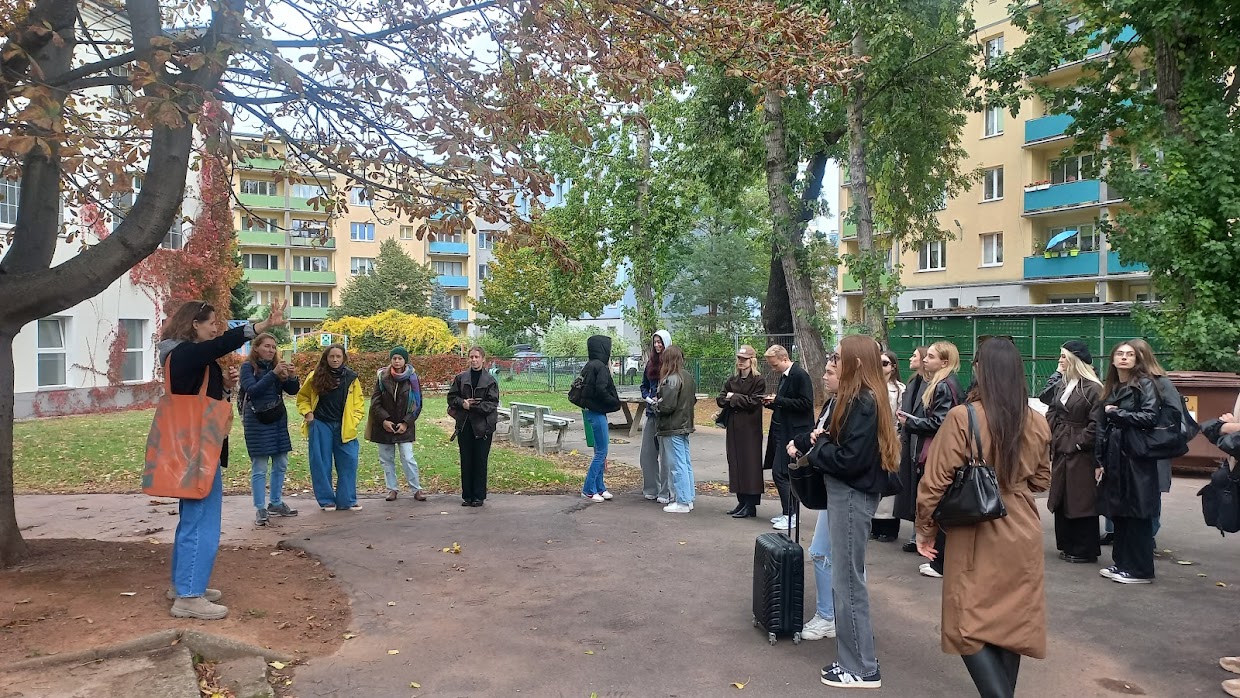
A series of guided and thematic walks at the forgotten Jewish cemetery site on Gwarna Street in Wrocław demonstrates how immersive memory walks can support participatory and educational approaches to difficult heritage.
These walks addressed different dimensions of the site:
- historical and spatial transformations of the cemetery,
- Jewish burial law and ethical principles of site protection,
- broader urban and multicultural history of former Breslau.
Participants explored the site through movement, storytelling, and discussion, gaining insight into its layered past while reflecting on its current condition as an unmarked urban space.
Although primarily knowledge-based, these walks implicitly incorporated elements of sensory engagement such as attention to spatial perception, atmosphere, and environmental context, which align with immersive methodologies and can be further expanded through soundscape integration.
Challenges
- HOW to communicate complex and sensitive histories in everyday urban space?
- HOW to balance educational content with participatory engagement?
- HOW to address differing levels of knowledge and emotional readiness among participants?
Solutions
- Structuring walks around specific themes (history, ethics, urban change)
- Involving experts and local stakeholders in knowledge-sharing
- Creating a space for dialogue and multiple perspectives
Key Takeaways
- Immersive memory walks enable non-invasive engagement with difficult heritage, especially in sites lacking visible markers.
- Soundscape practices introduce an additional sensory and affective dimension, allowing participants to experience memory through listening.
- These approaches support community-building, critical reflection, and ethical awareness without requiring permanent interventions.
- They can function as preparatory or complementary tools for longer-term commemorative processes.