

Context
Growing social polarization and the phenomena of information bubbles make networking projects increasingly necessary. Such initiatives create a safe space for the exchange of knowledge and experience, as well as for capacity-building and strengthening social resilience. There is a particular need for this type of support among various vulnerable groups, including early-career Holocaust researchers and Jewish artists in Poland.
The freedom of research and artistic practice within these groups is significantly affected by the ongoing conflict in the Middle East, rising antisemitism, as well as changing political leadership and cultural or memory policies in the country. As individuals, they may experience precarious working and social conditions; however, the creation of dedicated networks and the development of structures for contact, support, and visibility can become an effective tool for sustaining further research and creative work, while also enhancing overall well-being.
An important aspect of the project’s sustainability is the growing recognition of its methods, themes, and results within broader professional, academic, and civic networks. Examples include the presentation “Ethics of Care in NGO–University Collaboration on Human Remains” by Agnieszka Jabłońska and Agata Strządała at the ICMEMOHRI 25th Anniversary Conference “From Memory to Memorialization”, held in Vienna, Austria, on 25–29 May 2026. The conference, organised by the ICOM International Committee for Memorial and Human Rights Museums, provided an international forum for discussing how personal and collective remembrance can be transformed into sustainable forms of public memorialization.
The project was also represented at regional and educational events in Poland, including the conference “Dolnośląskie tematy” in Jelenia Góra on 23–25 April 2026, where the presentation “Gwarna – green memorializations and walks through the non-obvious places of Wrocław” introduced the project’s work on local memory, ecological forms of commemoration, and urban heritage walks. Another example was the workshop “How to Teach Difficult Heritage? New Tools and Methods of Work”, delivered during the meeting “A Humanist’s Encounter with Jewish History, Culture and Tradition in Poland and Europe” in Wrocław on 20–22 March 2026, organised in cooperation with educational and cultural partners including Amicis in Educatione, the Galicia Jewish Museum, secondary schools in Wrocław, and the Polish Teachers’ Union.
In this way, sustainable networking becomes a key dissemination strategy. The project does not end with individual events, but circulates through new partnerships, invitations, educational formats, and professional exchanges, strengthening a wider community of practice around difficult heritage, civic memory, and socially engaged memorialization.
Highlights
- Creating a platform for the exchange of knowledge, experience, and expertise among a young generation of researchers and scholars, fostering peer-to-peer learning and collaboration.
- Designing programs that emphasize social and community integration, as well as environmental and contextual awareness, rather than focusing solely on academic or scholarly value.
- Strengthening the resilience of the Holocaust research community—often vulnerable to geopolitical shifts, rising antisemitism, and changes in political or funding landscapes—through bottom-up strategies.
Case Study 23: Early- and Intermediate-Career Holocaust Scholars’ Workshops, Warsaw (Poland)
Description
Workshops for Early- and Intermediate-Career Holocaust Scholars is a grassroots initiative launched in December 2024 (by June 2026, five gatherings had taken place). The first workshop brought together 60 participants, indicating strong interest in and demand for this type of initiative.
Its aim is to create a platform for the exchange of knowledge, experience, and research findings. The project is coordinated by the Zapomniane Foundation, and the partners include the United States Holocaust Memorial Museum (USHMM) and the POLIN Museum of the History of Polish Jews. Each workshop held in Warsaw at the POLIN Museum includes academic panels that enable participants to present their current research and/or methodologies and to engage in substantive discussion of related challenges. The programme also features a side event (e.g., a guided tour of a temporary exhibition) connected to Holocaust studies and/or Jewish heritage, as well as a concluding session with impressions, takeaways, and ideas for improvements.
The network is grassroots and democratic in nature, which also allows independent and unaffiliated researchers to join. Members can propose topics and ideas for the programme of future gatherings. Presentations may address research questions across a wide range of formats (articles, monographs, collective projects), which further helps to reduce any hierarchical divisions within the network.
The broad spectrum of topics discussed – from “szmalcownictwo” (blackmailing Jews during the German occupation), through histories of other victim groups, personal biographies, and the materiality of the Holocaust, to discussions on the impact of the conflict in Gaza and other crises (political, climate-related, and armed conflicts) on Holocaust studies and on researchers themselves – creates much needed space for the research community to address potentially sensitive issues in a safe environment.
The network’s structure supports integration within the field and fosters potential collaboration. An important aspect of ensuring accessibility is that travel expenses are reimbursed, and accommodation and meals are covered by the event organisers.

Challenges
- HOW to reach dispersed Holocaust researchers at different stages of their academic careers, across diverse thematic fields and geographic locations?
- HOW to propose an open format that enables participatory co-creation by participants while maintaining substantive value and academic quality?
- HOW to foster long-term integration of the researchers’ community and build a safe space for the exchange of ideas, experiences, and challenges, rather than only for presenting research outputs?
Solutions
- The open nature of the network and flexible options of participation (e.g., hybrid format) in individual meetings, depending on one’s availability
- Establishing an organising team responsible for coordinating the organisational process, scheduling, and accompanying events
- Ensuring, in addition to thematic side events, a dedicated slot in the agenda for informal meetings and conversations
Case Study 24: Kultur-Lige, Warsaw, Cracow, Wrocław (Poland)
Highlights
- Networking and connecting a community that does not have a formalized institutional structure of coexistence or collaboration, but instead operates through more fluid, informal, and project-based relationships.
- Increasing the visibility of contemporary Jewish artist, helping to broaden recognition of their work within both local and international contexts.
- Fostering new collaborations and creative opportunities among the artists, enabling the emergence of shared projects and interdisciplinary exchange.
Description
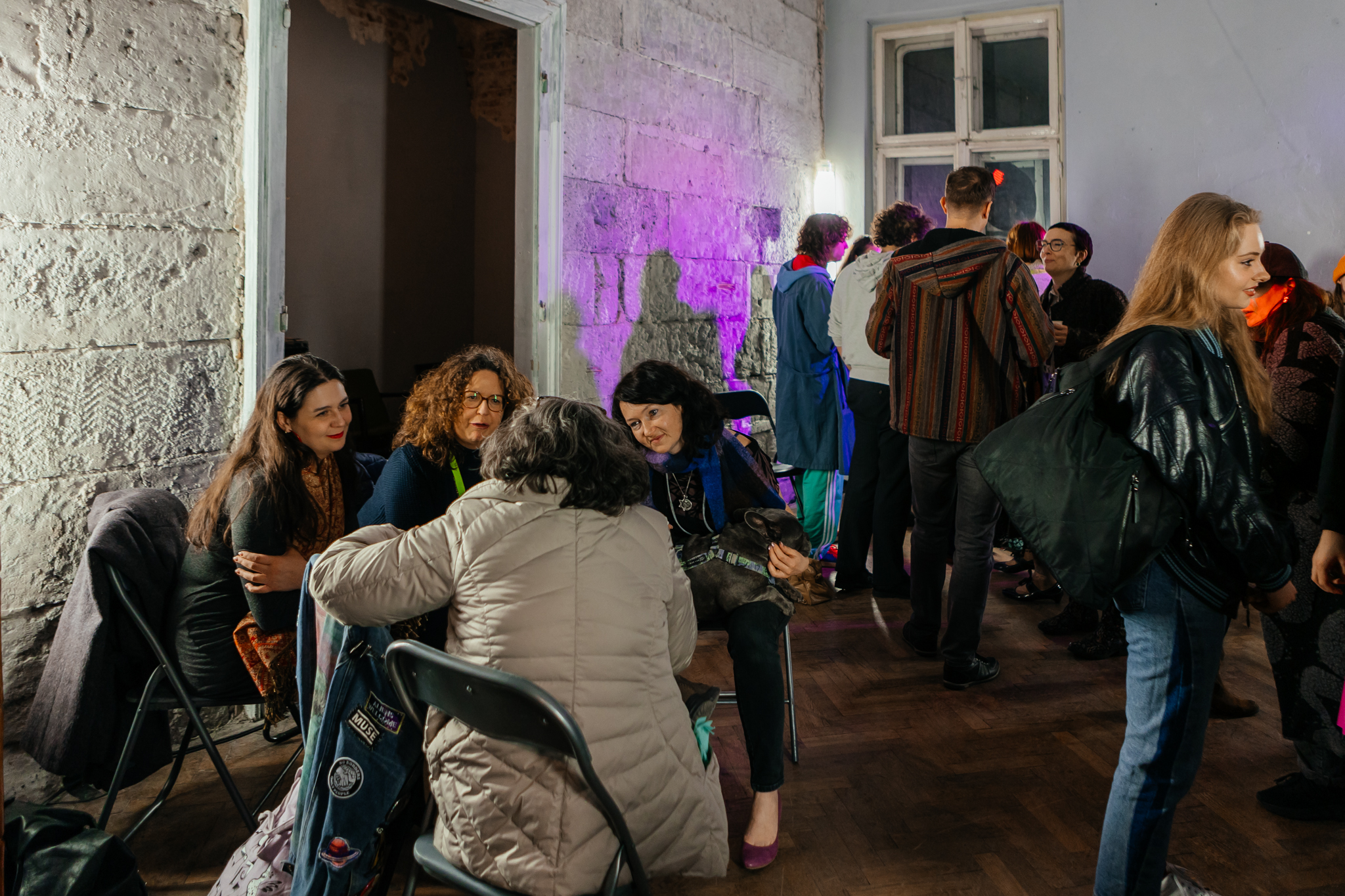
The Jewish Artists’ Network Kultur-Lige was launched in December 2023 by FestivALT, the Zapomniane Foundation, and the POLIN Museum of the History of Polish Jews as a community-based initiative aimed at connecting artists and creating a platform to promote their work. As of June 2026, the network includes more than 50 members, and six gatherings have already taken place in different Polish cities, including Warsaw, Kraków, and Wrocław.
The name of the network refers to the historical organisation active in Central and Eastern Europe in the twentieth century, which brought together Jewish cultural organisations from Ukraine, Poland, Romania, Lithuania, and Latvia. Kultur-Lige (Yiddish for “Cultural League”) aimed to promote Jewish education, literature, art, music, and theatre at the time. Its contemporary iteration seeks to fulfil a similar role.
The network brings together artists from different disciplines and generations, with diverse biographical backgrounds, varying levels of recognition, and from different locations across Poland. This diversity is one of the network’s key strengths.
In addition to co-organising gatherings and events, FestivALT has conducted a series of interviews with artists in the network and produced artist catalogues that were distributed to curators of Jewish festivals in Poland. The aim was to increase the visibility of contemporary Jewish culture and the people creating it, while also challenging the stereotype of the Holocaust as the end of Jewish cultural and artistic activity.
Alongside recurring programme elements such as artistic presentations, discussions in a world café format, and concluding sessions, the gatherings also include thematic accompanying events (e.g., walks, exhibitions, study visits, theatre performances) and professional development activities (workshops and laboratories).
Many of the artists involved in the network have participated in interviews published on the FestivALT website, been featured in the documentary series Kultur-Docs and catalogue for curators, and had their work presented in the We Are Here exhibition at the POLIN Museum. Participation in the network has had a tangible impact on increasing both visibility and opportunities for collaboration.
Challenges
- HOW to respond to the need for stronger integration within the Jewish artistic community in the context of growing polarisation and antisemitism?
- HOW to bring together representatives of different generations, career stages, and creative sectors?
- HOW to strengthen the resilience of minority communities in times of crisis and increase their visibility in the public sphere?
Solutions
- Creating an open, non-hierarchical network with no membership fees, coordinated by experienced organisations, while encouraging members’ direct input
- Organising recurring gatherings focused on presenting artistic practices, networking, and fostering collaborations
- Supporting network members on an ongoing basis by sharing information about grants, events, and professional opportunities
Key Takeaways
- Building and sustaining networks is essential for different types of communities, as it enables exchange of knowledge, experiences, and professional perspectives while strengthening a sense of belonging.
- Regular interaction, structured opportunities for engagement, and ongoing communication beyond formal events help maintain continuity and increase the long-term impact of such networks, supporting participants’ development and resilience.
- Increasing visibility and creating spaces for recognition within institutional, academic, and cultural contexts enhances both professional growth and personal wellbeing, reinforcing the overall strength and sustainability of emerging communities.