
Background
Anti-discrimination training can be strengthened when it moves beyond classroom-based learning and incorporates direct engagement with places of memory. In the context of difficult heritage, historical sites, especially those neglected, destroyed, or socially forgotten can become powerful learning environments for understanding how stereotypes, prejudice, exclusion, and collective forgetting are formed and reproduced.
This approach connects psychological education with field-based memory work. It allows participants to examine not only how discrimination operates in social relations, but also how urban landscapes preserve, obscure, or erase the histories of different communities. It is especially relevant in cities such as Wrocław, where Jewish, German, and Polish histories overlap, and where many pre-war cemeteries and heritage sites remain neglected, fragmented, or only partially recognized.
This tool builds on participatory and educational methods already present in the Difficult Heritage Toolbox, especially practices based on community engagement, dialogue, and learning through direct interaction with difficult heritage sites.
Case Study 15: Anti-Black Racism Training and Critical Tour of the Africa Museum, Brussels, Belgium
Highlights
- Using a decolonial guided tour as part of anti-Black racism training
- Analysing colonial statues, displays, captions, and silences as forms of symbolic violence
- Discussing how museums may reproduce racist stereotypes even after institutional reforms
- Addressing the unequal division between Black testimony and white institutional expertise
- Recognising refusal, withholding knowledge, and activist pressure as legitimate forms of resistance
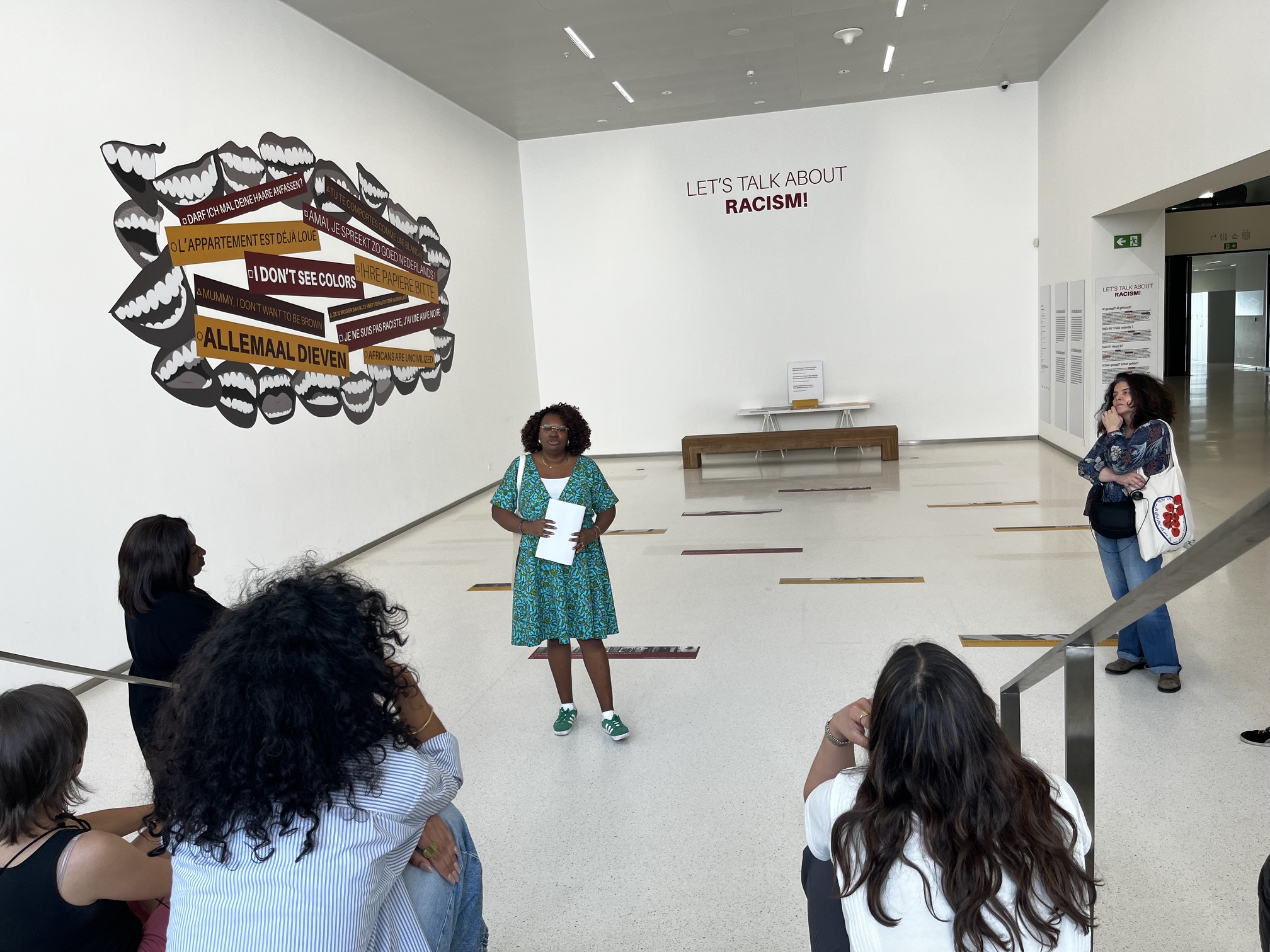
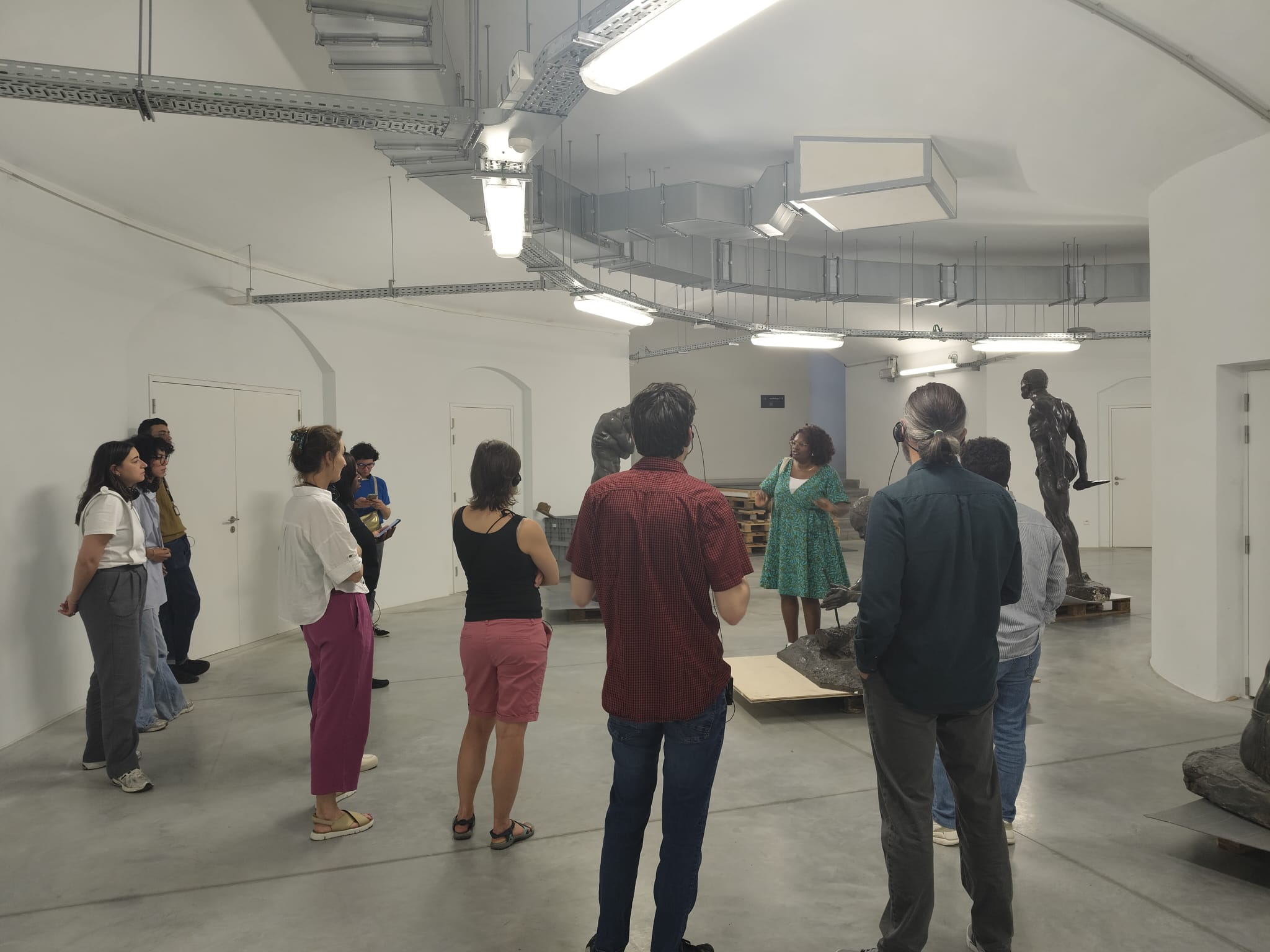
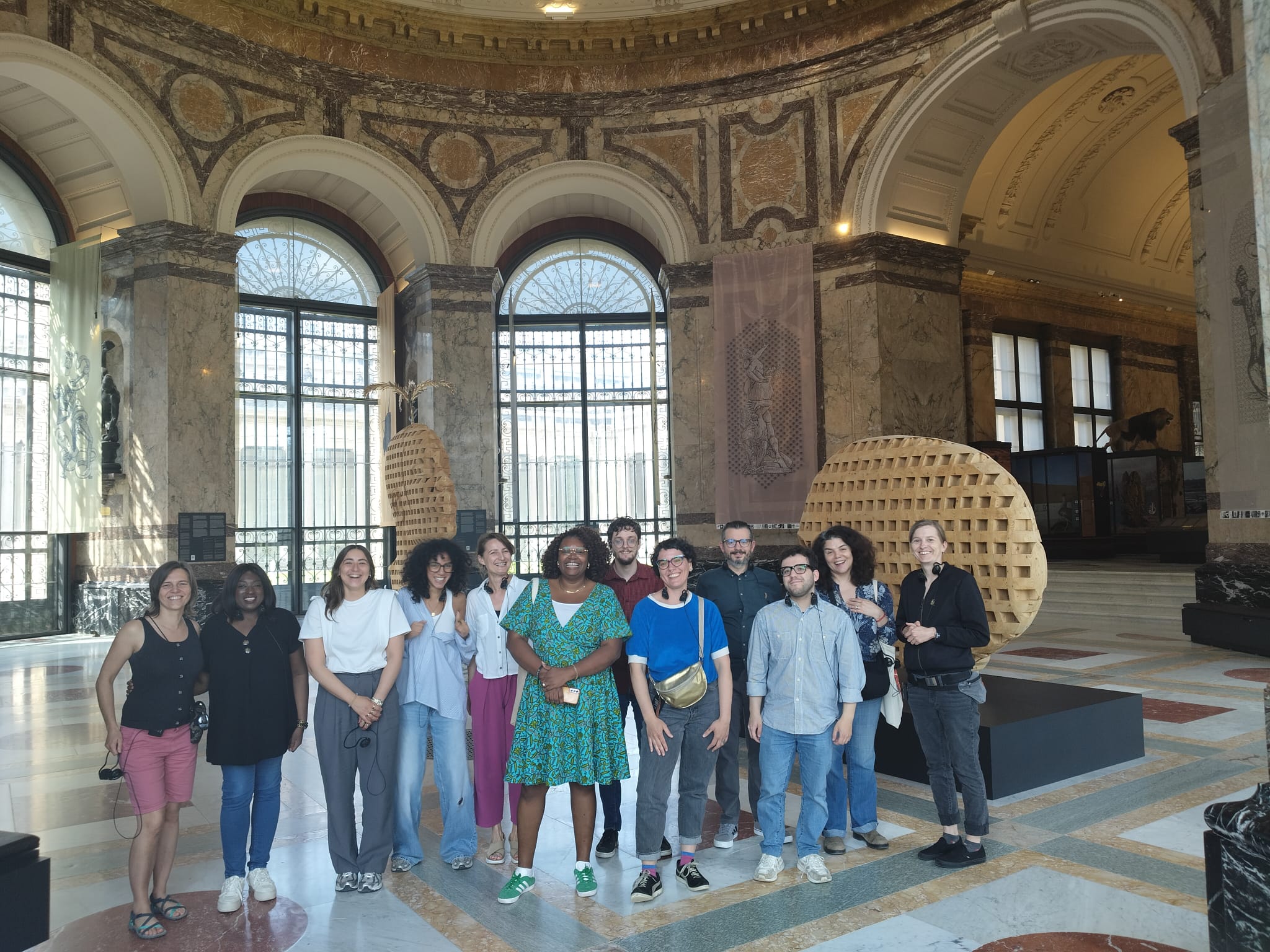
As part of the ReActMem project, an anti-Black racism training included a decolonial guided tour of the Royal Museum for Central Africa in Tervuren, led by Femiya. The training was organised by CEJI for an international and local group of participants and took place over two days: the first day consisted of a critical museum tour, while the second day was devoted to anti-Black racism training and facilitated reflection.
Description
As part of the ReActMem project, an anti-Black racism training included a decolonial guided tour of the Royal Museum for Central Africa, led by Femiya. The training was organised for an international and local group of participants and took place over two days: the first day consisted of a critical museum tour, while the second day was devoted to anti-Black racism training and facilitated reflection.
The museum tour examined how colonial narratives continue to shape the representation of Africa and African people. A key point of discussion concerned statues historically displayed in the museum that presented white colonisers and Indigenous Africans through a colonial visual hierarchy. These representations reinforced racist stereotypes of Black people as physically strong but intellectually inferior, childlike, fearful, primitive, or dependent. Some of these statues were removed following activist interventions, demonstrating how anti-racist activism can challenge museum authority and transform public displays.
The tour also addressed the museum’s handling of ritual and sacred objects. Participants discussed how some Black communities choose not to correct incomplete or inaccurate museum information about such objects. This refusal was presented not as a lack of cooperation, but as a strategy of resistance to extractive knowledge practices. In the context of colonial collections, where objects, bodies, stories, and knowledge were often taken without consent, withholding information can become a form of protection. Some objects are not meant to be fully explained, exposed, or made visible to the museum gaze.
Another important element concerned contemporary digital testimonies of Black Belgians presented in the museum. The guide drew attention to the danger of reproducing a “human zoo” logic when Black people are positioned mainly as providers of personal testimony, while white museum professionals remain those who frame, interpret, and authorise knowledge. In this structure, Black participants are invited to speak from experience, while expertise remains institutionally located elsewhere. The tour therefore raised a critical question: who is allowed to be a witness, and who is recognised as an expert?
The colonial history room was also discussed critically. Its narrative begins with slavery, offering little space for African histories before European domination. Colonial violence is addressed only partially, while resistance against colonisation in Congo receives limited attention. The absence of stronger visual and narrative material documenting Belgian atrocities, including the work of women who exposed violence such as mutilations, was identified as a significant omission. Women’s contributions are also underrepresented, with few stories or portraits acknowledging their role in resistance, documentation, care, political struggle, and historical memory.
Through these examples, the tour showed that colonial museums can reproduce symbolic violence not only through explicit racist imagery, but also through omission, classification, silence, expert hierarchies, and the display of objects detached from their cultural, spiritual, and political contexts.
Challenges
- HOW can a museum acknowledge colonial violence without reproducing spectacle or trauma consumption?
- HOW can anti-racist training address institutional racism, not only interpersonal prejudice?
- HOW can museums avoid placing Black people only in the role of witnesses while reserving expertise for white professionals?
- HOW can sacred, ritual, or sensitive objects be protected from extractive interpretation?
- HOW can colonial stereotypes embedded in statues, captions, and display strategies be made visible to participants?
Solutions
- Using the museum as a critical learning environment
Participants were invited to analyse displays, statues, captions, architecture, and absences as evidence of institutional memory-making. - Reading representation as power
The tour showed how racial stereotypes can be produced through posture, scale, sequencing, visual contrast, and the relationship between displayed bodies and authoritative museum narration. - Recognising activist intervention as heritage work
The removal of racist statues following public and activist pressure was presented as part of the ongoing struggle over colonial memory. - Understanding refusal as resistance
The decision not to correct museum information about certain ritual objects was framed as a legitimate response to colonial extraction and symbolic violence. - Questioning the division between testimony and expertise
Participants reflected on how museums may include Black voices while still maintaining white institutional control over interpretation. - Identifying narrative gaps
The tour drew attention to what remained marginalised: precolonial African histories, Congolese resistance, women’s contributions, documentation of Belgian atrocities, and the continuing effects of colonialism.
Key takeaways
- A decolonial museum tour can make institutional racism visible in ways that classroom training alone often cannot.
- Anti-Black racism should be discussed not only as prejudice, but also as a system embedded in collections, architecture, display, language, and expert authority.
- Museums may reproduce harm even when they include critical elements, especially if Black participation is limited or framed only as testimony.
- Refusal to share knowledge can be an ethical and political practice, especially in relation to sacred or ritual objects.
- Activist interventions are not external disruptions of museum work; they are often necessary forms of public accountability.
- Critical heritage practice can support anti-racist education by linking colonial history with contemporary inequalities and institutional responsibility.
Case Study 16: “City Memory and (Non)Memory – Anti-Discrimination Education through the Unseen Histories,” Wrocław, Poland
Highlights
- Combining anti-discrimination education with field visits to neglected memory sites
- Linking psychological mechanisms of prejudice with historical erasure, collective memory, and urban space
- Using the city district as an open-air classroom for difficult heritage education
- Engaging diverse groups, including seniors, informal community leaders, students of Universities of the Third Age, teachers, NGO activists, educators, heritage professionals, police officers, and civilian police employees
- Recognizing participants not as passive recipients of knowledge, but as active interpreters of memory, history, and social responsibility
- Using facilitated dialogue as a tool for reflection without judgement, simplification, or ready-made answers
Description
The series of workshops and anti-discrimination trainings “City Memory – Discovering the Unseen Histories of Wrocław” and “(Non)Memory and the Psychological Traps of Judgement” was organized in Wrocław by the Urban Memory Foundation in cooperation with the EkoRozwój Foundation, an organization specializing in environmental education, sustainable development, community engagement, critical global education, and anti-discrimination training.
The activities were designed as an integrated educational programme combining collective memory education, anti-discrimination training, intergenerational learning, and site-based encounters with neglected urban heritage. They addressed different groups of participants, including seniors, informal community leaders, students of Universities of the Third Age, teachers, educators, NGO activists, heritage professionals, police officers, and civilian employees of the Wrocław Police.
The workshop series “City Memory – Discovering the Unseen Histories of Wrocław” consisted of two editions, held on 27 September and 18 October 2025. It was addressed primarily to seniors, informal community leaders, and students of the University of the Third Age at the University of Wrocław and the University of the Third Age at the Wrocław University of Economics. The workshops aimed to deepen participants’ understanding of Wrocław’s multilayered heritage and to encourage reflection on how individual and collective memories are shaped, forgotten, or contested.
The morning sessions introduced participants to the foundations of collective memory and to the psychological and social mechanisms that reinforce stereotypes, prejudice, exclusion, and simplified judgements. Through discussion and group exercises, participants explored the links between identity, social perception, discrimination, historical silence, and urban memory.
The afternoon sessions took the form of educational walks through the Nadodrze district, which served as an open-air learning environment. Participants visited places connected with the neighbourhood’s pre-war communities, with particular attention to Jewish histories that shaped the multicultural character of Nadodrze before the Second World War. The walks highlighted traces of presence, displacement, erasure, and transformation visible in architecture, spatial layout, and overlooked historical markers.
A parallel strand of the programme focused more explicitly on anti-discrimination education through the format “(Non)Memory and the Psychological Traps of Judgement.” The first day-long workshop took place on 23 June 2025 and was addressed to participants from educational, civic, and heritage-related backgrounds. The training explored how personal and collective memory function, and how psychological mechanisms such as stereotypes, bias, cognitive shortcuts, labelling, and prejudice shape perceptions of other people and groups.
This training combined three components: a workshop session on group identity, cognitive distortions, and the roots and consequences of discrimination; guided visits to local sites of non-memory, including the Jewish cemetery site at Gwarna Street and the neglected German cemetery at Krzycka Street; and a facilitated dialogue using the Nansen Center for Peace and Dialogue method.
During the site visits, memory activists from the Urban Memory Foundation and the civic initiative Spod Ziemi Patrzy Breslau introduced participants to grassroots work around forgotten, neglected, or destroyed memory sites in Wrocław. These visits connected historical context with contemporary practices of community remembrance, artistic intervention, environmental commemoration, and civic responsibility. The final dialogue session revolved around the question: “What does forgetting protect us from?” This opened space for reflection on avoidance, denial, fear, responsibility, and the emotional functions of forgetting in both individual and collective life.
A second edition of the anti-discrimination training took place on 13 October 2025 and was organized for uniformed police officers and civilian employees of the Wrocław Police. Its aim was to support participants in recognizing how stereotypes, social memory, and historical awareness influence professional conduct, particularly in interactions with diverse communities. The training addressed mechanisms of labelling, prejudice, antisemitism, group identity, and social categorization. For police officers involved in prevention, education, and intervention-based tasks, the workshop emphasized how cognitive shortcuts can distort judgement and affect relationships with different social groups.
A key component of this edition was a guided field visit to South Park, founded by a Jewish-German philanthropist, and to the neglected German cemetery at Krzycka Street. The field component, led by Spod Ziemi Patrzy Breslau, allowed participants to encounter places where traces of pre-war German and Jewish communities intersect with the post-war urban life of Polish Wrocław. This situated learning helped participants reflect on contested histories, erasure, and the social consequences of neglected memory. No photographs from this training were published due to security considerations.
Across all editions, the workshops demonstrated that difficult heritage education becomes more effective when it moves beyond the classroom and enters the urban landscape. By encountering sites of neglected memory in situ, participants were able to connect emotional, spatial, historical, and analytical dimensions of learning. The programme showed that memory is embedded in the city’s fabric, but often requires attentive interpretation, dialogue, and ethical engagement in order to become visible.
The workshops were facilitated by Aneta Osuch and Arkadiusz Wierzba from the EkoRozwój Foundation, specialists in critical global education, anti-discrimination training, and dialogue facilitation, with contributions from the Urban Memory Foundation and Spod Ziemi Patrzy Breslau.
Challenges
- HOW to connect anti-discrimination education with local difficult heritage and neglected memory sites?
- HOW to help participants recognize stereotypes and prejudice not only as abstract concepts, but as historically shaped social mechanisms?
- HOW to address difficult histories with participants whose own memories, family biographies, or professional experiences may intersect with Wrocław’s post-war transformations?
- HOW to counter stereotypes about ageing by treating seniors as active partners in public memory work?
- HOW to create a safe space for difficult conversations among participants with different professional, generational, and personal backgrounds?
- HOW to work with groups such as police officers, whose professional responsibilities make awareness of bias, labelling, and cognitive shortcuts especially important?
- HOW to connect anti-discrimination education with local history in a way that is accessible, respectful, and engaging?
Solutions
- Designing the workshops as dialogue-based and participatory formats rather than lecture-only trainings.
- Using local examples of forgotten or erased heritage to show how exclusion operates in space, memory, public narratives, and everyday perception.
- Involving seniors as carriers of memory, interpreters of local history, and community voices.
- Working with experienced anti-discrimination trainers to maintain a respectful, inclusive, and reflective atmosphere.
- Combining reflective exercises with walks through urban spaces marked by hidden, marginalized, or uncomfortable histories.
Key Takeaways
- Sites of memory can become powerful learning environments for anti-discrimination education.
- Neglected or forgotten places help participants understand how exclusion operates not only socially, but also spatially and historically.
- Combining psychological education with field visits deepens reflection on stereotypes, prejudice, and responsibility.
- Anti-discrimination training can be adapted to different groups, including educators, activists, police officers, seniors, and community leaders.
- Memory-based education supports inclusive identities, civic responsibility, and long-term community engagement.
See also: Case Studies 4.4, 12